Six-Day Painting Workshop Inspired by Manjit Bawa Kicks Off at Lucknow Public School
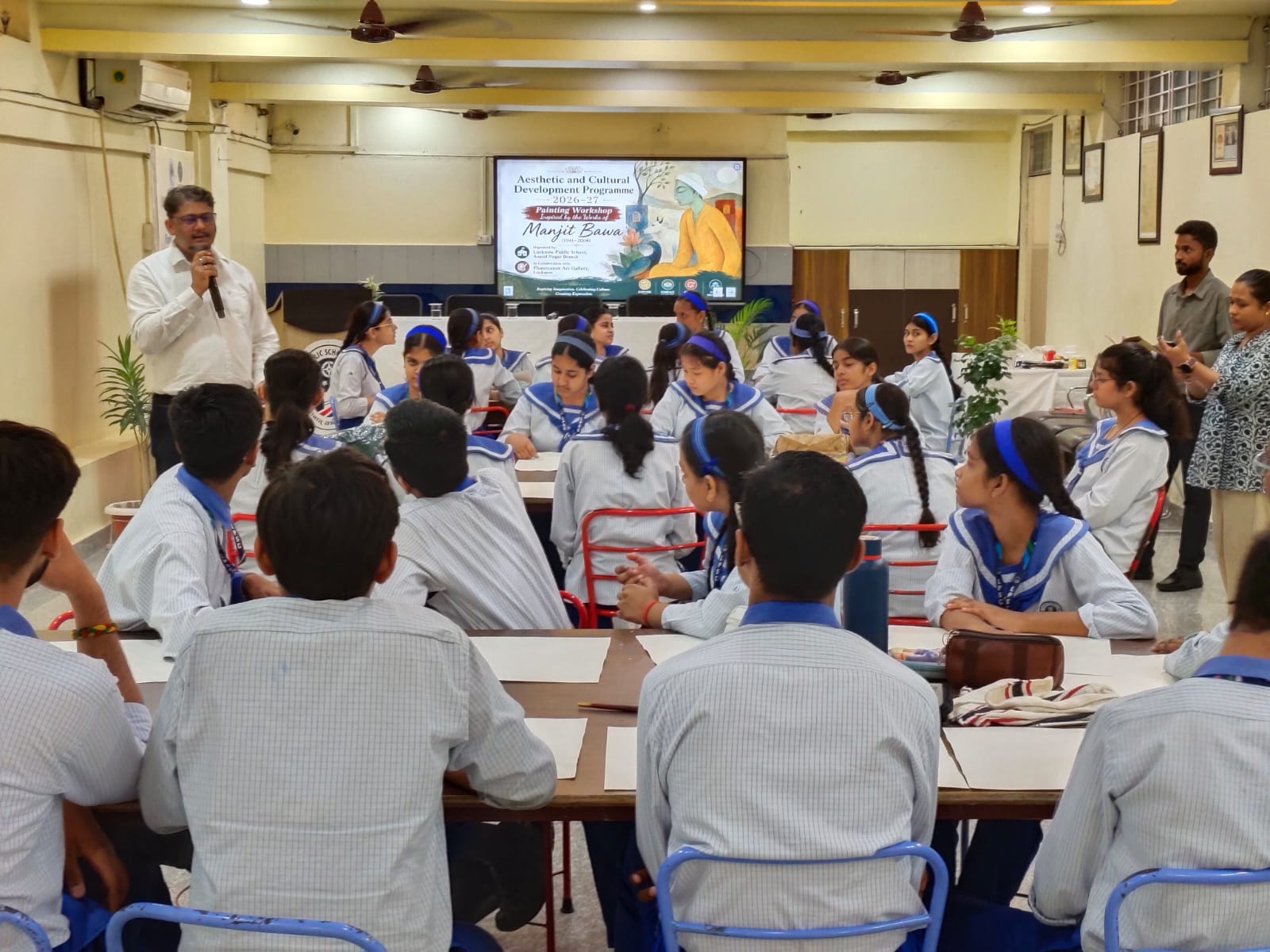
Lucknow — Students at Lucknow Public School’s Anand Nagar branch got a colorful start to their week as a six-day painting workshop centered on the life and work of celebrated Indian contemporary artist Manjit Bawa (1941–2008) opened on campus. The workshop is part of the school’s Aesthetic and Cultural Development Programme for 2026–27, and has been organized jointly by Lucknow Public Schools and Colleges and Florescence Art Gallery, Lucknow.

The idea behind the initiative is simple but ambitious: introduce students to Bawa’s distinctive painting style, his sense of color, and the artistic and philosophical outlook that made him one of the most recognizable names in Indian contemporary art. Bawa was known for his bold, vivid color palettes, deceptively simple yet striking forms, and his ability to weave together spiritual symbolism, Indian mythology, nature, and raw human emotion.
Dr. Meenakshi Khemka, Assistant Director of the State Museum, Lucknow, attended as chief guest and addressed the students, emphasizing that art is far more than the act of drawing or painting — it’s a powerful tool for creative thinking, cultural awareness, and self-expression. She encouraged the students to approach their art practice with curiosity, discipline, and dedication, and to channel their imagination in positive directions.
School Principal Meena Tiwari and Sunanda Mathur also praised the workshop, noting that such initiatives help build students’ aesthetic sensibility, confidence, emotional depth, and creative vision. They urged participants to keep practicing and experimenting to sharpen their artistic talent.
Neha Singh, founder and director of Florescence Art Gallery and Director (Academics and Innovation) at Lucknow Public Schools and Colleges, said introducing students to the work of great Indian artists is very much a need of the hour. Understanding Manjit Bawa’s life, philosophy, and artistic vision, she said, helps students develop respect for Indian art and culture, along with sensitivity and their own original creative identity.

Gallery curator and art critic Bhupendra Kumar Asthana gave an inspiring talk on Bawa’s artistic vision and his innovative use of color, form, and symbolism. He spoke about how Bawa transformed Indian mythology, spiritual thought, and folk culture into a modern visual language that earned Indian contemporary art global recognition. Addressing the students directly, he said every child carries an artist within — and that spark comes alive the moment they start engaging with color and putting their imagination onto paper. He reminded them that there’s no such thing as a “good” or “bad” painting; every piece of art is simply a true reflection of the artist’s mind, emotions, and imagination. He encouraged the students not to shy away from new colors and new experiments, while staying rooted in India’s artistic and cultural traditions.
Young artist Rishabh Gautam gave a live demonstration of Manjit Bawa’s painting techniques during the workshop, walking students through the nuances of his color combinations, simple forms, expressive shapes, and balanced compositions, while motivating them to experiment creatively within an Indian artistic framework. The workshop is being coordinated by the school’s art teacher, Neelanjana Kanjilal, under whose guidance students are exploring Bawa’s artistic language and creative process through observation, experimentation, discussion, and hands-on practice.
Senior art teacher Rajesh Kumar shared that 35 students from the school are taking part enthusiastically in the six-day workshop. Through lectures, demonstrations, discussions, and studio practice, participants are expected to gain a deeper understanding of Bawa’s painting techniques and artistic philosophy, while also building their own artistic skills, aesthetic sensibility, creative thinking, and confidence.
The event closed on a hopeful note, with organizers expressing confidence that the workshop will help connect students to India’s rich artistic heritage while nurturing creativity, cultural awareness, and aesthetic thinking. The initiative is being seen as a meaningful step toward promoting art education, preserving India’s artistic legacy, and fostering innovation, creativity, and cultural values in the younger generation.